Tricep Dip (Legs on Bench)
Lifters without dip bars, or without the strength for them yet, use this version to load their triceps with bodyweight. Your hands grip the edge of a bench behind you, your heels rest on a second bench in front, and you lower your hips toward the floor between the two by bending your elbows. Putting your legs up shifts more of your weight onto your arms than the feet-on-floor bench dip does.
- Primary muscle
- Triceps
- Also works
- Front delts, Chest
- Equipment
- Bench
- Type
- Compound
How to do the tricep dip (legs on bench)
- Place two benches parallel, about a leg's length apart. Sit on the edge of one with your hands gripping the edge beside your hips, fingers pointing forward, shoulder-width apart.
- Place your heels on the second bench with your legs straight, then slide your hips off the first bench.
- Keep your arms straight but not locked, and position your back close to the bench.
- Bend your elbows and lower your body toward the floor until your elbows are at about a 90-degree angle, keeping your back close to the bench.
- Keep your shoulders down and away from your ears.
- Push through your palms to straighten your arms and lift your body back to the starting position, keeping your movement controlled.
- Repeat for the desired number of repetitions.
Benefits, mistakes and tips
Benefits
- Raising your feet to hand height puts more bodyweight through your arms, a clear step up from heels on the floor.
- It needs only two benches, which nearly every gym has free.
- Your lap is level, so it's the easiest dip to add a plate to later.
- The triceps work through a long range, from deeply bent elbows to straight.
- It builds the elbow-straightening strength that helps the top half of bench presses and bar dips.
Common mistakes
- Hips drifting forward away from the bench. Your shoulders get pulled into a deep stretch behind you and the triceps lose their line of push.
- Sinking far below 90 degrees at the elbow because it feels like more range. Most of that extra depth is shoulder strain.
- Shoulders rolling forward and rising toward your ears at the bottom.
- Elbows splaying out sideways.
- Pushing through your heels to help, which turns it into a partial bridge.
Form tips
- Stay close enough that your back brushes the bench on the way down and up.
- Chest proud, shoulder blades pulled back and down before you bend your arms.
- Point your elbows straight behind you.
- Lower for two to three seconds and stop when your upper arms are parallel to the floor.
- Press through the heels of your hands until your arms are straight.
Alternatives to the tricep dip (legs on bench)
Close matches for the same muscles, with different equipment, so a busy station doesn’t stop your workout.
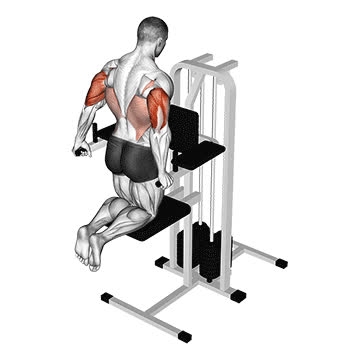
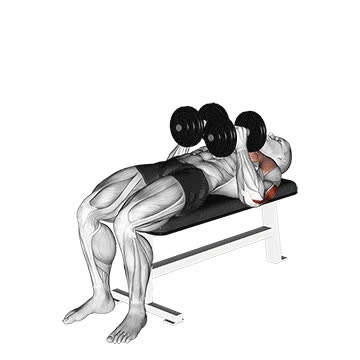
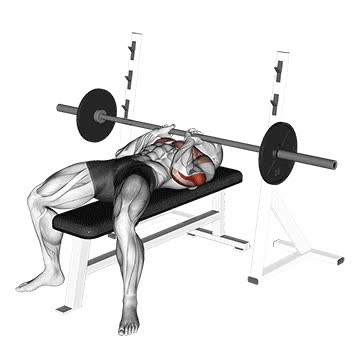
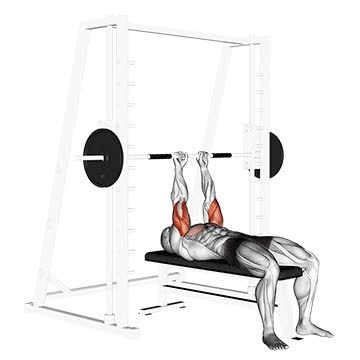
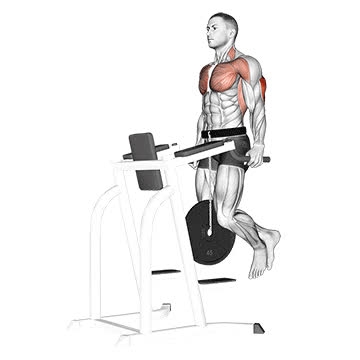
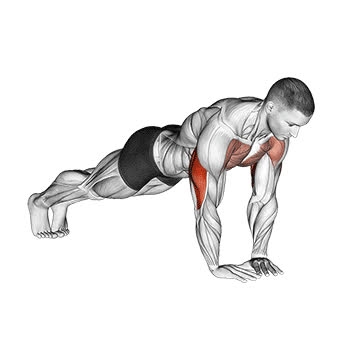
Add the tricep dip (legs on bench) to your plan
Pumpd builds your program from your goal, days and equipment. Every exercise here is in the app, so you can add this one to any day.
Questions about the tricep dip (legs on bench)
How many sets and reps should you aim for?
Three sets of 8 to 15. If you can't reach 8 with your legs straight on the bench, bend your knees or put your feet back on the floor. When 15 comes easily at full depth, add a plate to your lap.
What can you do with only one bench or none?
Diamond push-ups need no equipment and hit the triceps hard, with your hands close together under your chest. With one bench and a pair of dumbbells, the dumbbell close-grip bench press trains the same elbow-straightening push and lets you add weight in small steps. Both put the shoulder in a more comfortable position than bench dips do for most people.
Should a beginner start with the legs-on-bench version?
No, start with your feet on the floor and knees bent. That takes a lot of weight off your arms and lets you learn the position: shoulders down, back close to the bench, elbows straight back. Move to straight legs on the floor, then to heels on a second bench, once you can do 12 reps at each stage.
How does it compare with the assisted tricep dip (kneeling)?
The assisted dip machine, where you kneel on a counterweighted pad, holds your body upright between two handles with your arms at your sides, a position most shoulders tolerate better. It also lets you set exactly how much help you get and reduce it over time toward full bar dips. Bench dips need no machine and can be set up anywhere, but the hands-behind position is rougher on the front of the shoulder. If the machine is there, use it to build toward bar dips, and keep bench dips for when it's not.
Free on iOS and Android.
Build your plan here, then run it in the app.