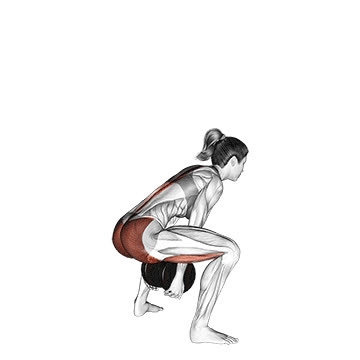
Kettlebell Swing
The kettlebell swing is a dynamic exercise that primarily targets the glutes while engaging several secondary muscles, including the hamstrings and core. It's an excellent full-body workout that improves strength, endurance, and coordination, making it a valuable addition to any fitness routine.
- Primary muscle
- Glutes
- Also works
- Hamstrings, Lower back
- Equipment
- Kettlebell
- Type
- Compound
How to do the kettlebell swing
- Stand with your feet shoulder-width apart, toes pointing slightly outward for a stable base.
- Grip the kettlebell with both hands using an overhand grip, arms extended straight in front of you.
- Engage your core to maintain stability throughout the movement.
- Bend your knees slightly and hinge at the hips, pushing your butt back as if you are about to sit on a chair.
- Swing the kettlebell back between your legs with control, keeping your arms straight and maintaining a flat back.
- Extend your hips forcefully, driving them forward to propel the kettlebell upward with momentum—not your arms. The power should come from your hips and glutes.
- As the kettlebell swings up, it should reach approximately shoulder height with your arms straight. Your body should form a plank position at the top of the swing.
- Let the kettlebell swing back down naturally, hinging at the hips again and allowing the kettlebell to move back between your legs, ready for the next swing.
- Repeat for the desired number of repetitions, ensuring you maintain good form and control throughout each swing.
Benefits, mistakes and tips
Benefits
- Enhances power and explosiveness
- Improves cardiovascular fitness
- Strengthens multiple muscle groups simultaneously
- Boosts metabolic rate and aids in fat loss
- Improves core stability and posture
Common mistakes
- Using too much arm strength instead of hip drive
- Swinging too high, leading to potential back strain
- Failing to maintain a neutral spine
- Not engaging the core, which can affect stability
- Neglecting proper breathing techniques
Form tips
- Focus on your hip hinge to maximize glute activation
- Keep your back straight and core engaged throughout the movement
- Use a kettlebell weight that allows for proper form
- Look forward, not down, to maintain alignment
- Control the weight on the way down to prevent injury
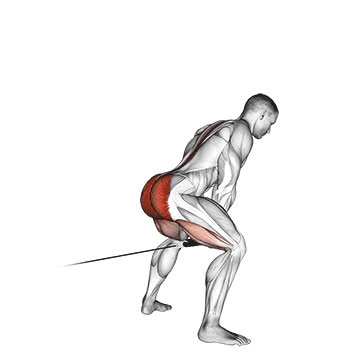
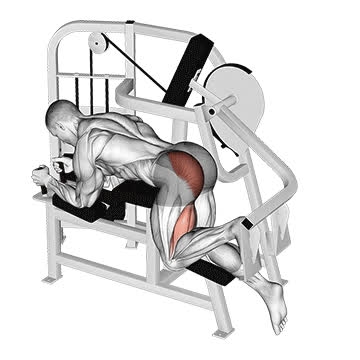
Alternatives to the kettlebell swing
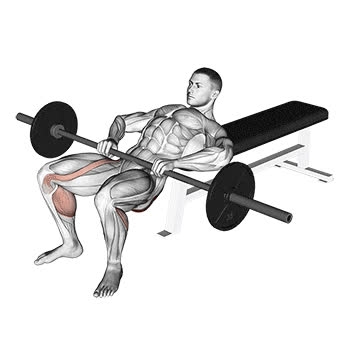
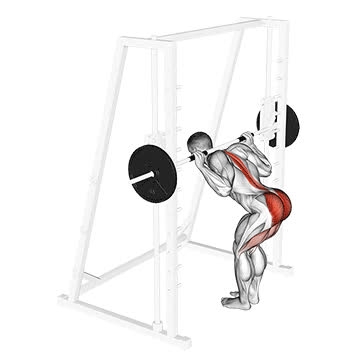
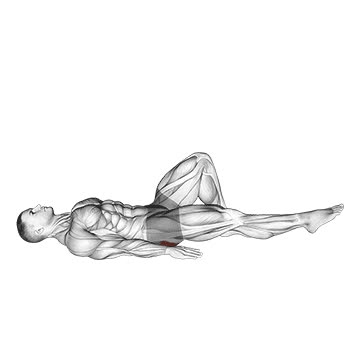
Close matches for the same muscles, with different equipment, so a busy station doesn’t stop your workout.
Add the kettlebell swing to your plan
Pumpd builds your program from your goal, days and equipment. Every exercise here is in the app, so you can add this one to any day.
Questions about the kettlebell swing
Is the kettlebell swing suitable for beginners?
Yes, the kettlebell swing can be suitable for beginners as long as they start with a lighter weight and focus on proper form. It's important to learn the hip hinge movement and maintain a neutral spine to prevent injury.
What are good complementing exercises for the kettlebell swing?
Good complementing exercises include squats, deadlifts, and lunges, which enhance lower body strength. Core exercises like planks or Russian twists can also improve stability, further enhancing your kettlebell swing performance.
Can I do the kettlebell swing at home?
Absolutely! The kettlebell swing is perfect for home workouts. All you need is a kettlebell, and you can perform it in spaces like your living room or garage without requiring additional equipment.
Does the kettlebell swing help build muscle or lose fat?
The kettlebell swing is effective for both muscle building and fat loss. It engages multiple muscle groups, boosting your metabolism and promoting muscle toning while providing a cardio workout that aids in fat shedding.
Free on iOS and Android.
Build your plan here, then run it in the app.