Dumbbell Standing Single-Arm Reverse Bicep Curl
Turn your palm down and a curl stops being mostly about the biceps. Holding one dumbbell with an overhand grip, you curl it toward your shoulder, and the muscles along the top of your forearm do most of the lifting. Working one arm at a time lets you watch the wrist stay straight, which is where most reverse curls go wrong.
- Primary muscle
- Forearms
- Also works
- Biceps
- Equipment
- Dumbbell
- Type
- Isolation
- Sides
- One side at a time
How to do the dumbbell standing single-arm reverse bicep curl
- Stand up straight with your feet shoulder-width apart, ensuring a stable base.
- Hold a dumbbell in one hand with an overhand grip, palm facing down.
- Extend your arm fully and keep it close to your body throughout the exercise.
- Engage your core to maintain balance and stability.
- Slowly curl the dumbbell up towards your shoulder, keeping your elbow close to your side and your upper arm stationary.
- Avoid any swinging or using momentum to lift the weight; focus on isolating the forearm muscles.
- Pause briefly at the top of the movement, ensuring full contraction of the forearm muscles.
- Slowly lower the dumbbell back to the starting position, resisting the weight as you return.
- Complete the desired number of repetitions for one arm before switching to the other.
- Switch arms and repeat the same steps for the other arm.
- Perform the exercise smoothly and steadily for the recommended sets and reps, focusing on form and control.
Benefits, mistakes and tips
Benefits
- It builds the thick muscle on the top of the forearm near the elbow, which ordinary curls barely reach.
- Each arm's grip and forearm strength gets tested alone, so you find out which side is weaker.
- Your free hand can rest on the working elbow to check it stays put.
- A palm-down grip teaches your forearm to hold the wrist straight under load, the same job it does on rows and pull-ups.
- Single dumbbells are easy to find, and the small jumps between them matter on a lift this light.
Common mistakes
- Letting the wrist bend back at the top so the knuckles point at the ceiling. The forearm muscles lose the load and the wrist takes it.
- Turning the palm in toward a hammer grip as the dumbbell rises. The rep gets easier and the forearm gets less out of it.
- Swinging the elbow forward to finish. The forearm muscles are weakest near the top, so the shoulder steps in.
- Picking up your usual curl weight. Expect to use around half to two-thirds of it.
- Holding the dumbbell off-center, so it tips toward your thumb or little finger and your wrist spends the set fighting it.
Form tips
- Keep the back of your hand in a straight line with your forearm, all the way up and all the way down.
- Rest your free hand on the working elbow to feel if it moves.
- Stop when your forearm is upright and start lowering right away.
- Take three seconds to lower. The forearm muscles respond well to a slow return.
- Grip the middle of the handle so the dumbbell stays level.
Alternatives to the dumbbell standing single-arm reverse bicep curl
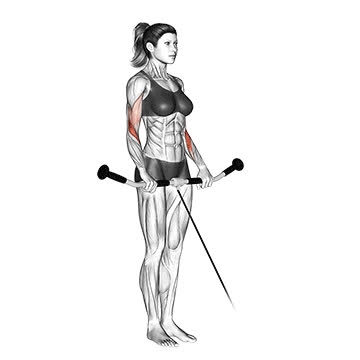
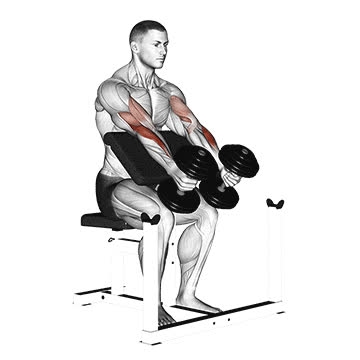
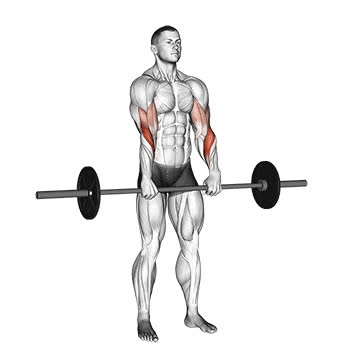
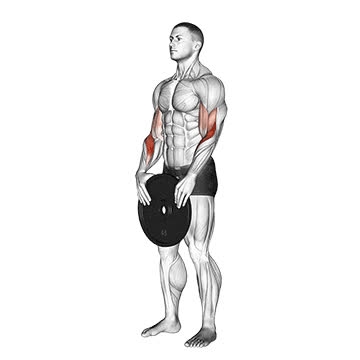
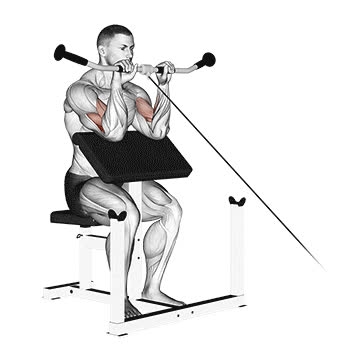
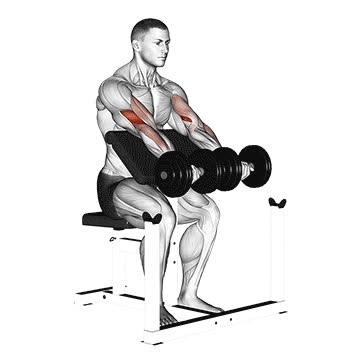
Close matches for the same muscles, with different equipment, so a busy station doesn’t stop your workout.
Add the dumbbell standing single-arm reverse bicep curl to your plan
Pumpd builds your program from your goal, days and equipment. Every exercise here is in the app, so you can add this one to any day.
Questions about the dumbbell standing single-arm reverse bicep curl
How heavy should I go on one-arm reverse curls?
Start with about half the weight you'd use for a normal one-arm curl and see whether you can do 12 reps with a straight wrist. If your wrist bends or your elbow swings before rep eight, go lighter. Move up only once 15 strict reps feel steady.
How does it compare with the cable reverse-grip bicep curl?
The cable reverse-grip curl is better for steady tension through the whole rep and for working both arms together, which saves time. The one-arm dumbbell version is better for evening out a difference between sides and lets each wrist sit at its own natural angle. Both train the forearms well, so use whichever suits your equipment and rotate the other in now and then.
Where does the reverse curl go in a workout?
At the end of a pull or arm day, after your rows and regular curls. Your forearms help grip on every pull, so tiring them first would cost you on the bigger lifts. Pair it with a triceps extension, alternating sets.
How many sets and reps should I do?
Two or three sets of 10 to 15 reps per arm. Forearms recover quickly and handle higher reps well, so lean toward 15 with a lighter dumbbell. Stay nearer ten if you're taking three or four seconds on every lowering.
Free on iOS and Android.
Build your plan here, then run it in the app.