Barbell Pullover
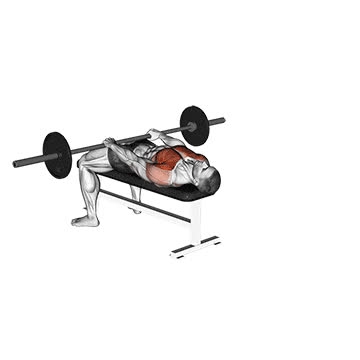
The barbell pullover is a powerful exercise primarily targeting the latissimus dorsi, while also engaging the pectorals and deltoids. This compound movement is excellent for improving upper body strength and flexibility, making it a versatile addition to any workout routine.
- Primary muscle
- Lats
- Equipment
- Barbell
- Type
- Isolation
How to do the barbell pullover
- Lie flat on a bench with your head at one end and your feet flat on the floor. Ensure your back remains in contact with the bench throughout the exercise.
- Hold a barbell with a shoulder-width grip, using an overhand (pronated) or neutral grip, as preferred.
- Extend your arms straight above your chest, keeping a slight bend in your elbows to protect your joints.
- Engage your core and stabilize your shoulders by retracting your shoulder blades.
- Lower the barbell in a controlled manner behind your head, maintaining the slight bend in your elbows. Keep your arms mostly aligned with your body. Lower until you feel a stretch in your lats but do not strain.
- Pause briefly at the bottom of the movement, ensuring control and avoiding any jerking motion.
- Engage your lats and slowly bring the barbell back to the starting position, following the same arc of motion vertically. Avoid fully locking your elbows at the top to maintain tension.
- Repeat for the desired number of repetitions, focusing on form and control during each rep.
Benefits, mistakes and tips
Benefits
- Enhances upper body strength
- Improves chest and back flexibility
- Stimulates core stabilization
- Targets multiple muscle groups
- Can aid in muscle hypertrophy
Common mistakes
- Using too much weight, compromising form
- Incorrect overhead positioning, leading to strain
- Failing to engage core muscles for stability
- Not controlling the barbell on the descent
- Rushing through the movement instead of maintaining a steady pace
Form tips
- Start with a lighter weight to master the technique
- Keep your elbows slightly bent throughout the movement
- Focus on using your lats to drive the motion rather than the arms
- Engage your core to protect your back during the exercise
- Perform with a full range of motion for maximum effectiveness
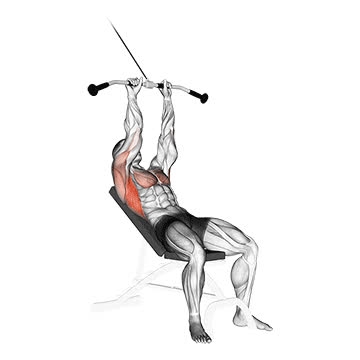
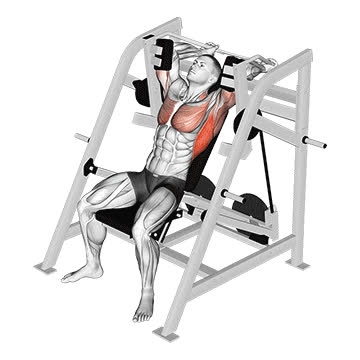
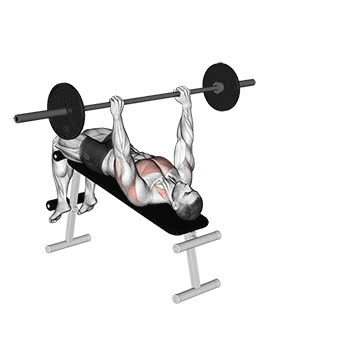
Alternatives to the barbell pullover
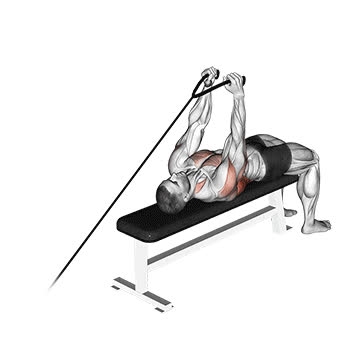
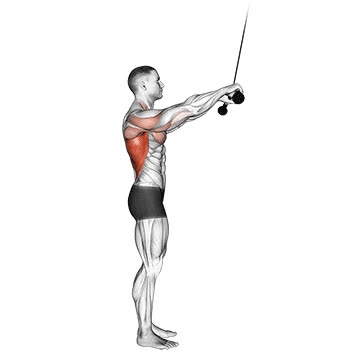
Close matches for the same muscles, with different equipment, so a busy station doesn’t stop your workout.
Pumpd builds the barbell pullover into your plan
Tell Pumpd your goal, days and equipment. It picks exercises like this one, sets your sets and reps, and balances weekly sets for every muscle.
Questions about the barbell pullover
Is the barbell pullover suitable for beginners?
Yes, the barbell pullover can be suitable for beginners, especially if starting with lighter weights. It’s essential to focus on form and core engagement to prevent injury. Beginners should consider consulting a trainer for proper technique.
What are good complementing exercises for the barbell pullover?
Complementing exercises include bent-over rows for back strength, bench presses for chest development, and tricep extensions for overall arm conditioning. These exercises systematically target the same muscle groups in different ways.
Can I do the barbell pullover at home?
Yes, you can perform the barbell pullover at home if you have access to a barbell or adjustable weights. Ensure you have enough space and a stable surface to safely execute the movement.
Does the barbell pullover help build muscle or lose fat?
The barbell pullover can contribute to building muscle, particularly in the back and chest areas, when combined with a proper diet and workout plan. While it primarily focuses on muscle development, it can aid fat loss if part of a calorie-burning regimen.
Free on iOS and Android.
Build your plan here, then run it in the app.