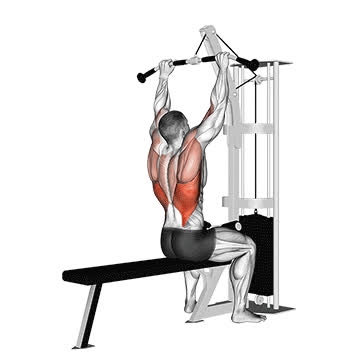
Archer Pull-Up
The archer pull-up is an advanced upper-body exercise that targets the lats while engaging several secondary muscles such as the traps, deltoids, and biceps. It enhances strength, balance, and coordination by emphasizing unilateral movement, making it a valuable addition to any strength-training routine.
- Primary muscle
- Lats
- Also works
- Rear delts, Biceps
- Equipment
- Pull-up bar
- Type
- Compound
- Sides
- One side at a time
How to do the archer pull-up
- Stand under a pull-up bar. Jump up or use a step to reach the bar with an overhand grip, slightly wider than shoulder-width apart.
- Let your body hang with arms fully extended. Engage your core, and draw your shoulder blades down and back to stabilize your shoulders.
- Start the movement by pulling yourself up. Bend one arm as you would in a regular pull-up, while the opposite arm remains straight to the side, guiding the movement.
- Continue pulling until your chin reaches above the bar. The bent arm should be fully flexed, and the straight arm should remain extended and engaged.
- Lower your body back down with control, extending the bent arm fully while maintaining tension in your muscles to prevent swinging or dropping.
- Once back in the hang position, repeat the movement by bending the opposite arm and keeping the first arm straight. Alternate arms with each repetition to ensure balanced development.
- Perform the desired number of repetitions, maintaining form and control throughout.
Benefits, mistakes and tips
Benefits
- Increases upper body strength and muscle definition.
- Enhances grip strength and shoulder stability.
- Improves coordination and muscle balance.
- Targets muscles more intensely than standard pull-ups.
- Develops dynamic strength for advanced calisthenics movements.
Common mistakes
- Not fully extending arms at the bottom of the movement which reduces range of motion.
- Using excessive momentum instead of controlled strength to lift the body.
- Neglecting core engagement, leading to poor form and stability.
- Allowing the shoulders to shrug up rather than keeping them down and engaged.
- Performing the exercise too quickly, sacrificing form for speed.
Form tips
- Engage your core throughout the movement to maintain stability.
- Use a controlled motion; focus on strength rather than speed.
- Gradually increase the width of your grip to challenge balance without compromising form.
- Warm up your shoulders and back before attempting to increase mobility and prevent injury.
- Practice on a lower bar to master the form before progressing to higher pull-up bars.
Alternatives to the archer pull-up
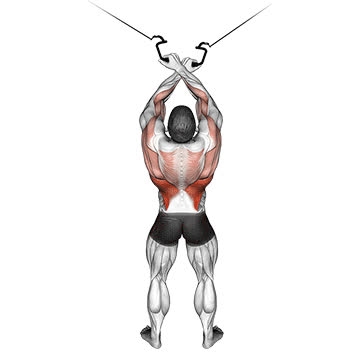
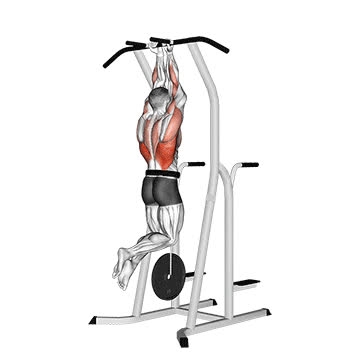
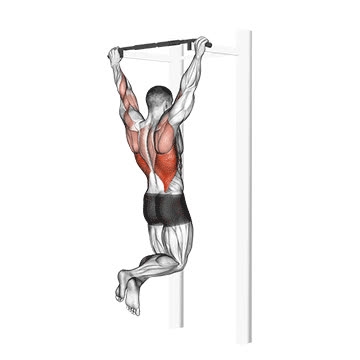
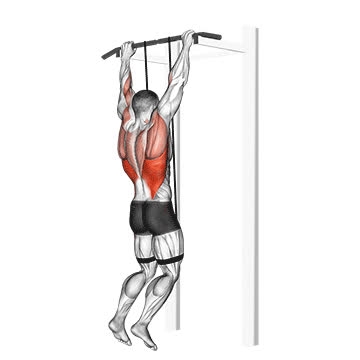
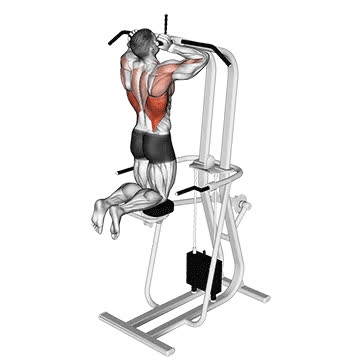
Close matches for the same muscles, with different equipment, so a busy station doesn’t stop your workout.
Add the archer pull-up to your plan
Pumpd builds your program from your goal, days and equipment. Every exercise here is in the app, so you can add this one to any day.
Questions about the archer pull-up
Is the archer pull-up suitable for beginners?
The archer pull-up is generally not recommended for beginners due to the required upper body strength and coordination. Beginners should first master standard pull-ups and build adequate strength before progressing to this advanced variation.
What are good complementing exercises for the archer pull-up?
Complementing exercises include standard pull-ups, chin-ups, and rows, which all target similar muscle groups. Additional exercises like scapular pull-ups can help increase shoulder stability and strength.
Can I do the archer pull-up at home?
Yes, if you have access to a sturdy pull-up bar or an appropriate alternative, you can perform the archer pull-up at home. Ensure your setup can support your body weight safely.
Does the archer pull-up help build muscle or lose fat?
The archer pull-up primarily helps build muscle in your upper body, particularly in the lats and arms. While it can aid in fat loss as part of a comprehensive workout plan, achieving fat loss also relies on proper nutrition and overall caloric expenditure.
Free on iOS and Android.
Build your plan here, then run it in the app.